overcast clouds 17.4°C
 English
 Česky
Česky Deutsch
 Русский
Tourist Attractions
Lazura Hill - Lazurový vrch
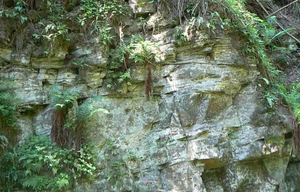
A northeast hillslope of Lazura Hill, about 1.5 km north-northwest of Michalové Hills. A debris forest with silver fir and wild cherry on a basal substrate of Lazura Hill, with the partial character of an old growth forest.
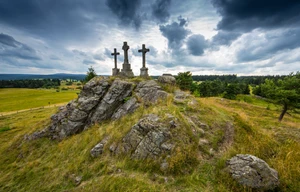
Three Crosses - Tři Křížky
The three crosses were erected here as a symbol of gratitude by spa patient who had been cured of their ailment in 1859. Endemite cerastium alsinifolium grows here, a plant not found anywhere else in the world. For this reason, entrance into the territory of the reservation is strictly prohibited.
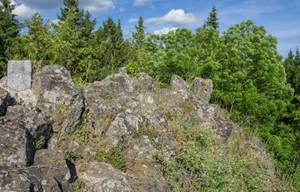
Homolka
About two kilometers south-southeast from the town of Bečov Nad Teplou, not far from the road to Chodov, is a natural monument. It was established to protect the rock formations made of basalt chimney formation with typical column cleats.
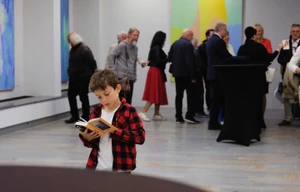
GALERIE MARIENBAD
Visitors can enjoy not only artworks but also film screenings dedicated to the life and work of the exhibiting artists. The combination of 19th-century architecture with modern art creates a unique atmosphere for an unforgettable cultural experience. The gallery’s curator is Alena Mrovcová.
Opening hours: daily 2:00–5:00 p.m.
Milhostov Mofette
This is group of sulphur dioxide gaseous effluences at Milhostov. It was declared a natural monument to protect the mofette, or discharge of gaseous sulphur dioxide.
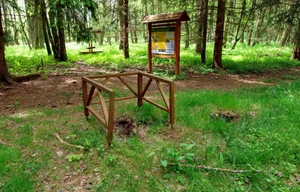
Central Park
The Central Park is situated in the heart of the city between Masarykova and Hlavni Streets. Here you’ll find a memorial to the Jewish residents of the city who had to flee or were deported before and during World War II. The memorial was unveiled in 2010 on the anniversary of the so-called "Kristallnacht", when the Nazis destroyed synagogues and Jewish buildings in many towns, including Mariánské Lázně. A sculpture called "Four Seasons" by Z. Šimek also adorns the space.
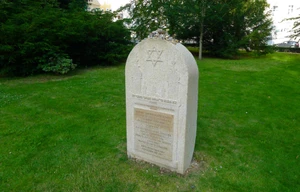
Evangelical Church of Corpus Christi
The evangelical church was built for evangelical spa guests in 1857 and was funded with donations from German evangelical Christians supported by the Prussian King Friedrich Wilhelm IV. He took part in its consecration 24th June 1857.
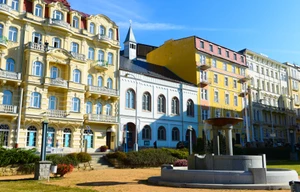
D-Club Dyleň
Put on your dancing shoes and get ready to groove in D-Club. In Addition to classic weekend dance parties you can party here with leading Czech and Slovak dance, pop and rap artists.
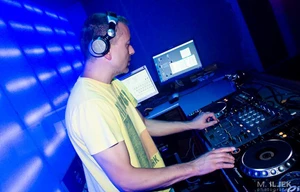
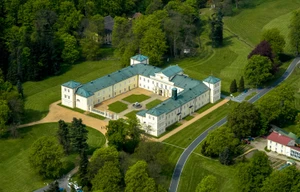
Lázně Kynžvart
A small, intimate town nestled on the edge of a beautiful forested area, Lázně Kynžvart was founded in 1214 and boasts an impressive past.
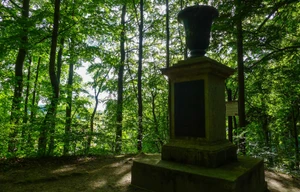
Waldstein Monument
Visitors can find the Waldstein Monument behind the headquarters of the Mariánské Lázně spa company. It was built in 1836 in honor of an illustrious visitor Earl Ernest von Waldstein-Wartenberg.
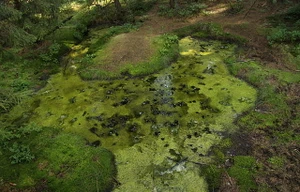
Smraďoch
As you walk through this part of the Slavkovský Forest, you may wonder what that rotten smell is. It comes from small rifts which host no life. Bleached skulls of field mice and forest birds, together with a myriad of insects grimly complete the picture.
SOOS Educational Trail
The shallow basin between the Vonšovský and Sooský Creeks (at the Nový Drahov train station, 6 km from Františkové Lázně) is divided by a mound of silicious sand into two parts.