clear sky 3.3°C
 English
 Česky
Česky Deutsch
 Русский
Tourist Attractions
Jewish cemetery
A Jewish enclave existed in Mariánské Lázně from around 1824 and by 1861 it had its own hospital with a small chapel. The Jewish cemetery close to the road to Velká Hleďsebe was founded in 1875. By 1930 it had been extended and is still used today.
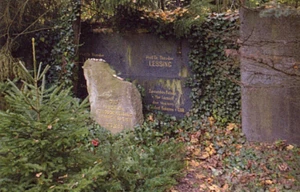
Lazura Hill - Lazurový vrch
A northeast hillslope of Lazura Hill, about 1.5 km north-northwest of Michalové Hills. A debris forest with silver fir and wild cherry on a basal substrate of Lazura Hill, with the partial character of an old growth forest.
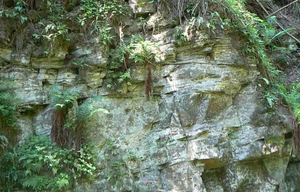
Wetland below Vlček - Mokřady pod Vlčkem
You won't find a single place in the entire Slavkovský Forest that suffers a lack of moisture. Often in times when wandering through the woods you might find yourself endlessly jumping over creeks and little streams as well as extensive wetlands.
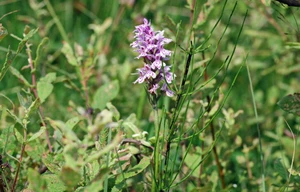
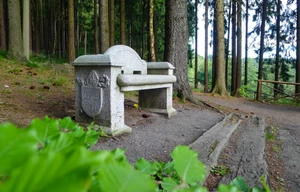
Clements' Place
Its beauty and serenity made this place a favourite with the Abbot Alfréd Clements of Teplá. A simple wooden bench stood here where the dignitary often used to sit. During his time as Abbot, Mariánské Lázně experienced the largest building boom of its early development (1888–1900).
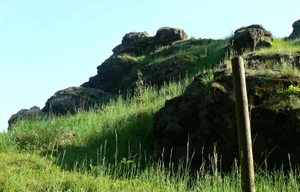
Domin Rock Formation - Dominova skalka
This small but unique protected area can be seen from the road connecting the village of Louka u Mariánských Lázní and Nová Ves.
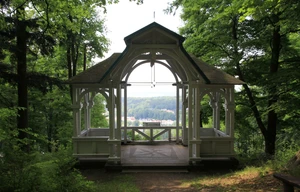
Mescery's Belvedere
This is a gazebo situated on a plateau above a boulder outcrop at the Royal Hotel where a decorated wooden structure originally stood. The building was inaugurated in 1850 in honour of an important guest to Mariánské Lázně - the Czech proconsul, Baron von Mescery.
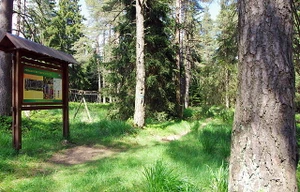
Vlček
Preserved pinewood on a serpentinite subsoil between Prameny and Sítina, this is a typical example of original forest pine growth (vogtland upland ecotype) on serpentinite.
Town theatre
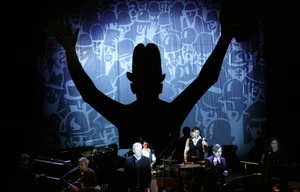
The first known theatre performance in Mariánské Lázně was played in a provisional wooden pavilion in the open air, said to be performed on 14th June in 1820. In 1868 F. Zickler built the original theatre building in the Neo-Renaissance style and a festive opening took place on 8th August.
Fairytale Paradise Sculptures
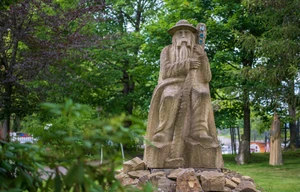
In the park in front of the hotel Krakonoš you can find a trail showcasing traditional fairytale figures. This trail features sandstone statues from famous fairytales.
Teplá River Valley - Údolí Teplé
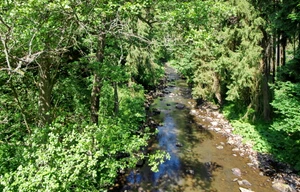
The Teplá River between Bečov and Loutnový, connects the sections of the Otročínský, Pramenský and Mnichovský Creek, about 8-16 km north-northeast of Mariánské Lázně.
Evangelical Church of Corpus Christi
The evangelical church was built for evangelical spa guests in 1857 and was funded with donations from German evangelical Christians supported by the Prussian King Friedrich Wilhelm IV. He took part in its consecration 24th June 1857.